
We’re watching the live mission coverage of Artemis II on YouTube as they begin their lunar observations. Amazing that even now, there are still landmarks on the moon that we are just seeing for the first time.
Space
Space exploration, astronomy, and looking up.
The Artemis II tracker is fantastic. Going to be keeping an eye on this for the rest of the mission.
Although Artemis II is only travelling to the moon, the distance is still vast, and even if it is currently travelling at around 1.24km per second, it will still take four days to reach the moon.
Too much cloud cover over us tonight to see the blue moon. Fingers crossed we get better visibility tomorrow.
Astronomy Photographer of the Year 2022
I’m a sucker for all things space, even more so when it comes to anything that allows us to see what’s in space. Hence the Astronomy Photographer of the Year competition is something I look forward to every year.
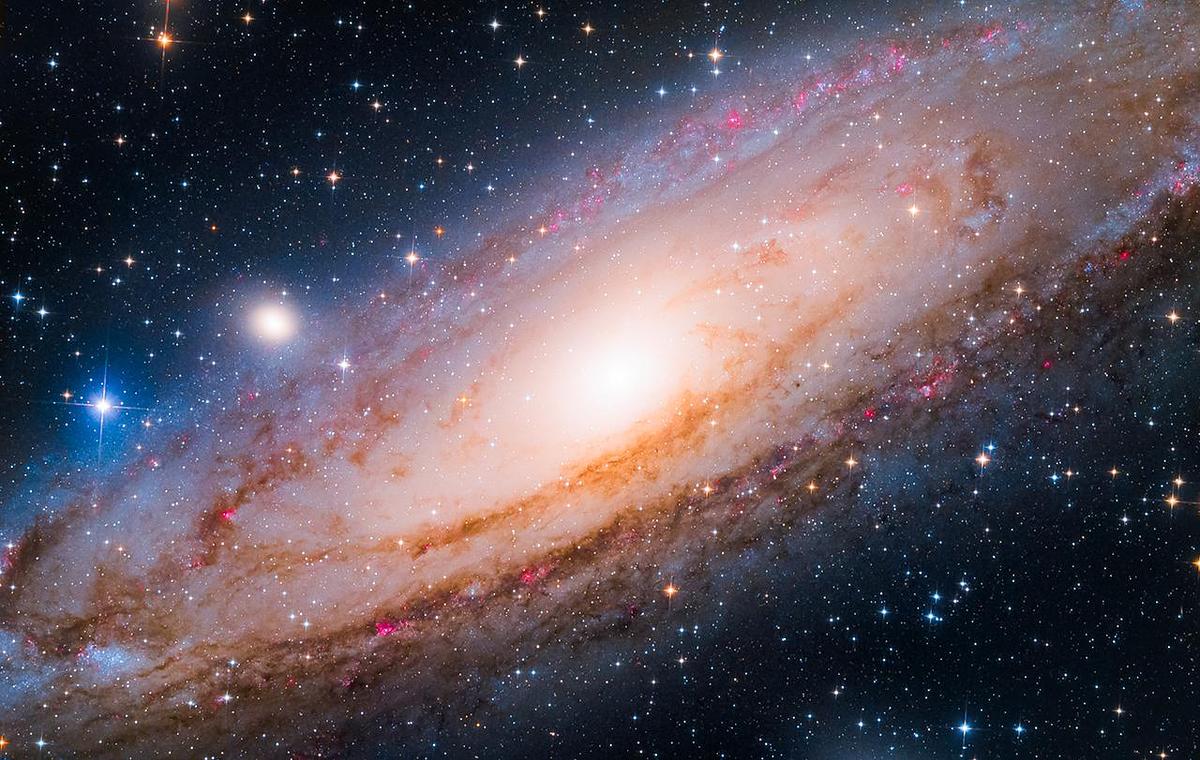
The Andromeda galaxy captured by Yang Hanwen and Zhou Zezhen which won Young Astronomy Photographer of the Year, is one of my favourites of this year’s winners.
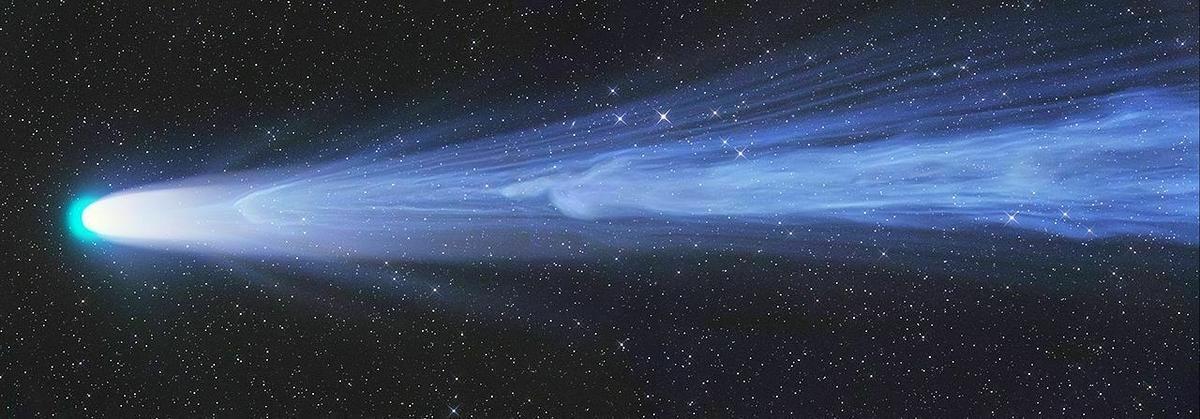
The overall winner though was Gerlad Rhemann’s image of Comet Leonard which was taken on Christmas Day of last year. It captures the point when a piece of the comet’s tail becomes seperated due to high velocity solar particles.
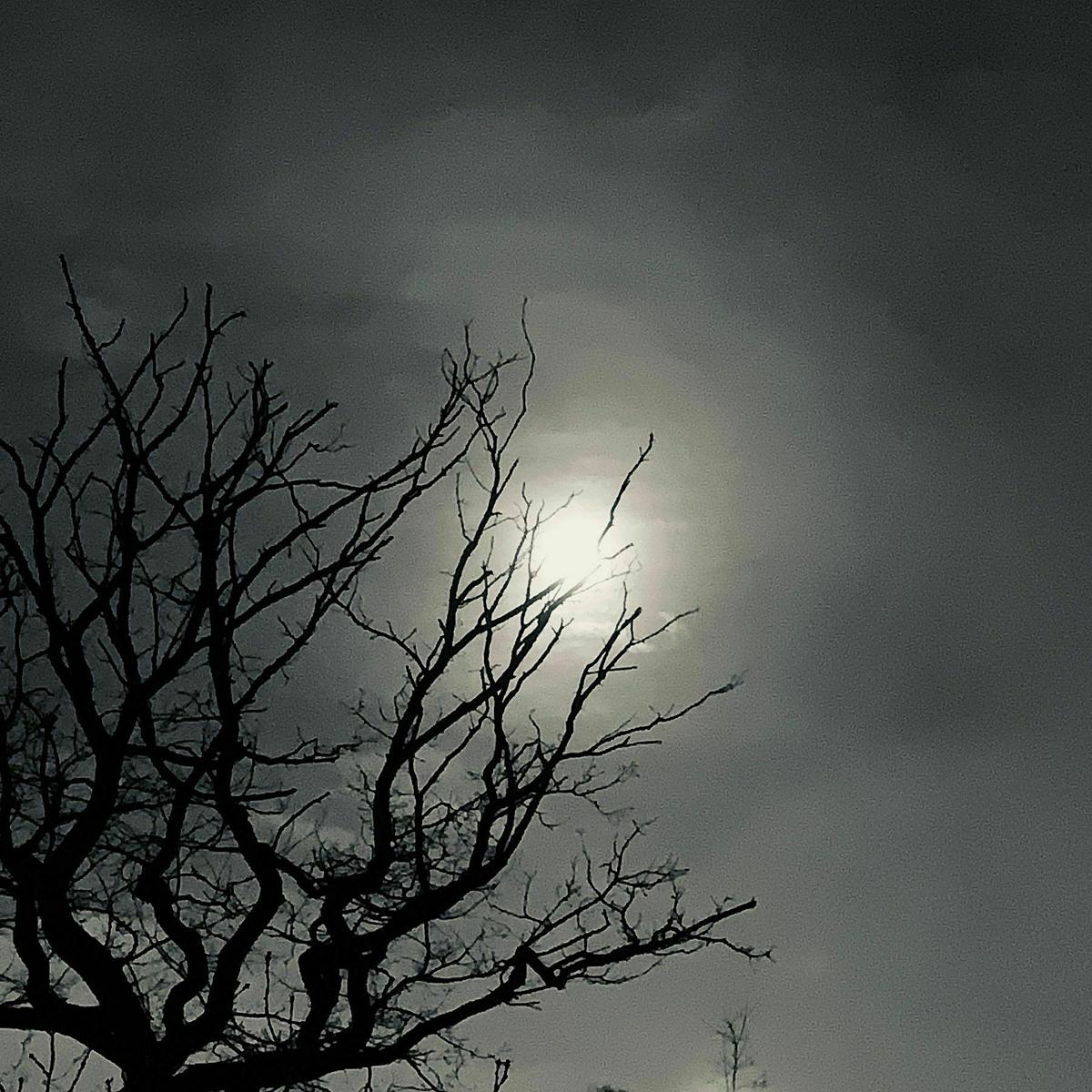
A very dark and broody sky for the snow moon.
Voyager 1 and Voyager 2 both have computers that have been running the same number of years I’ve been on this planet. That’s some uptime service level agreement!
I dare you to find a better picture of the moon than this one. I also think I have found myself a new wallpaper for my iPhone’s home screen.
Voyager 2 has officially entered interstellar space. The distances still boggle my mind.
Saturn in our sky and other planets.
I’ve always imagined what this would be like. Now I know!
This timelapse from the ISS is just amazing.
The only thing I like about Google these days is their homepage doodle.
I don’t use their search page that often now, but I liked their doodle today for the Arecibo message.
Voyager 2 still going. Space sure is amazing.
The best map in the galaxy
This morning, the European Space Agency unveiled a new, highly detailed sky map of the Milky Way Galaxy that showcases the brightness and positions of nearly 1.7 billion stars. It’s the most comprehensive catalog of stars to date, and it includes precise details about many of the stars’ distances, movements, and colors as well. With the map’s release, astronomers are hoping to use this information to learn more about the structure of our galactic home and how it first formed billions of years ago.
— New galactic map shows the positions and brightness of 1.7 billion stars by The Verge
The numbers are just mind boggling, precise positions of over 1 billion stars.
The 360 degrees view of what the Gaia spacecraft mapped is worth clicking through for.
Stephen Hawking is right; you all should leave planet Earth.
Kurt Harden is staying behind. I might join him.
No super moon last night, just the Scottish equivalent. Super cloudy skies and rain.
Where is Everybody?
Last week my wife Jennifer was looking for something to read during her lunch break. She stumbled across this piece on reasons why we appear to be so alone in the universe. Read at your peril. The numbers are mind boggling.
As many stars as there are in our galaxy (100 – 400 billion), there are roughly an equal number of galaxies in the observable universe—so for every star in the colossal Milky Way, there’s a whole galaxy out there. All together, that comes out to the typically quoted range of between 1022 and 1024 total stars, which means that for every grain of sand on every beach on Earth, there are 10,000 stars out there.
— The Fermi Paradox by Wait But Why
The Vastness of Space
It’s stuff like this that just boggles my mind.
Compared with the overall vastness of space, the moon is very close to us: it’s just 238,900 or so miles away. But compared with our daily experience, absolutely everything in space is absurdly far apart. In the gap between us and the moon, you could neatly slide in all seven of the other planets — with a bit of room to spare. That includes Saturn and Jupiter, which are about nine and 11 times as wide as Earth, respectively.
— 11 images that capture the incredible vastness of space by Vox
Hawking's Reith Lecture
An amazing illustrated guide to Stephen Hawking’s wonderful second Reith lecture on black holes.

“These close-up images, showing the diversity of terrain on Pluto, demonstrate the power of our robotic planetary explorers to return intriguing data to scientists back here on planet Earth,” said John Grunsfeld, former astronaut and associate administrator for NASA’s Science Mission Directorate. “New Horizons thrilled us during the July flyby with the first close images of Pluto, and as the spacecraft transmits the treasure trove of images in its onboard memory back to us, we continue to be amazed by what we see.”
— New Horizons Returns First of the Best Images of Pluto by NASA
Tilt shifting is the effect used in photography to simulate a miniature scene, but I’ve never seen it done on such a scale with these tilt shifted photographs of galaxies and nebulae.


via Behance
How the Night Sky Should Look
Jupiter and Venus Converge
UK-based observers will be able to see the convergence of Jupiter and Venus through the month of June. I’ll be watching for this one.
Black Holes & Clones
The BBC earth mini-site aims to explain what happens when you fall into a black hole.
After all, the event horizon is not like a brick wall floating in space. It’s an artefact of perspective. An observer who remains outside the black hole can’t see through it, but that’s not your problem. As far as you’re concerned there is no horizon.
Sure, if the black hole were smaller you’d have a problem. The force of gravity would be much stronger at your feet than at your head, stretching you out like a piece of spaghetti. But lucky for you this is a big one, millions of times more massive than our Sun, so the forces that might spaghettify you are feeble enough to be ignored.
— The Strange Fate of a Person Falling Into a Black Hole by BBC Earth
I had to read this a couple of times to get it. Well worth the time to read though!
Stairway to Space
Space, stairs, butter, motorcycles and slinkies.
And they say education is boring! I got my oldest to start reading these. He struggles with some of the words, but he gets the gist of the explaination.

Journey across the world using your mouse with these amazing images taken from the International Space Station.
via SwissMiss
Hunter's Moon Over the Alps

There’s more where this came from on the Astronomy Photographer of the Year shortlist.
via Mme. Scherzo
Awesome to Know ...
… there are still places in the universe where Instagram users can’t take pictures … yet.

via KA-CHING!
I wish the sky could look like this ...
… at night without having to drive miles to get away from the light pollution.
Moon setting behind the temple of Poseidon

Edge of the universe
Another little gem that hit my inbox courtesy of Caesura Letters:
Sitting at the edge of the universe prompts me to ask the same questions I find myself contemplating as I look up into the starry night sky: How did this universe come into being in the first place? How did this mind-achingly massive void of nothingness get here first? What, precisely, is nothingness and how much of it is out there beyond our universe?
— Edge of the universe by Caesura Letters
Get your daily dose of solitude with Caesura Letters. It’s the one thing that makes me want to open my inbox every day.
Final journey for Space Shuttle Enterprise

It's a busy universe

This image contains over 200,000 galaxies and yet this image only represents a small percentage of space. The numbers just boggle the mind.