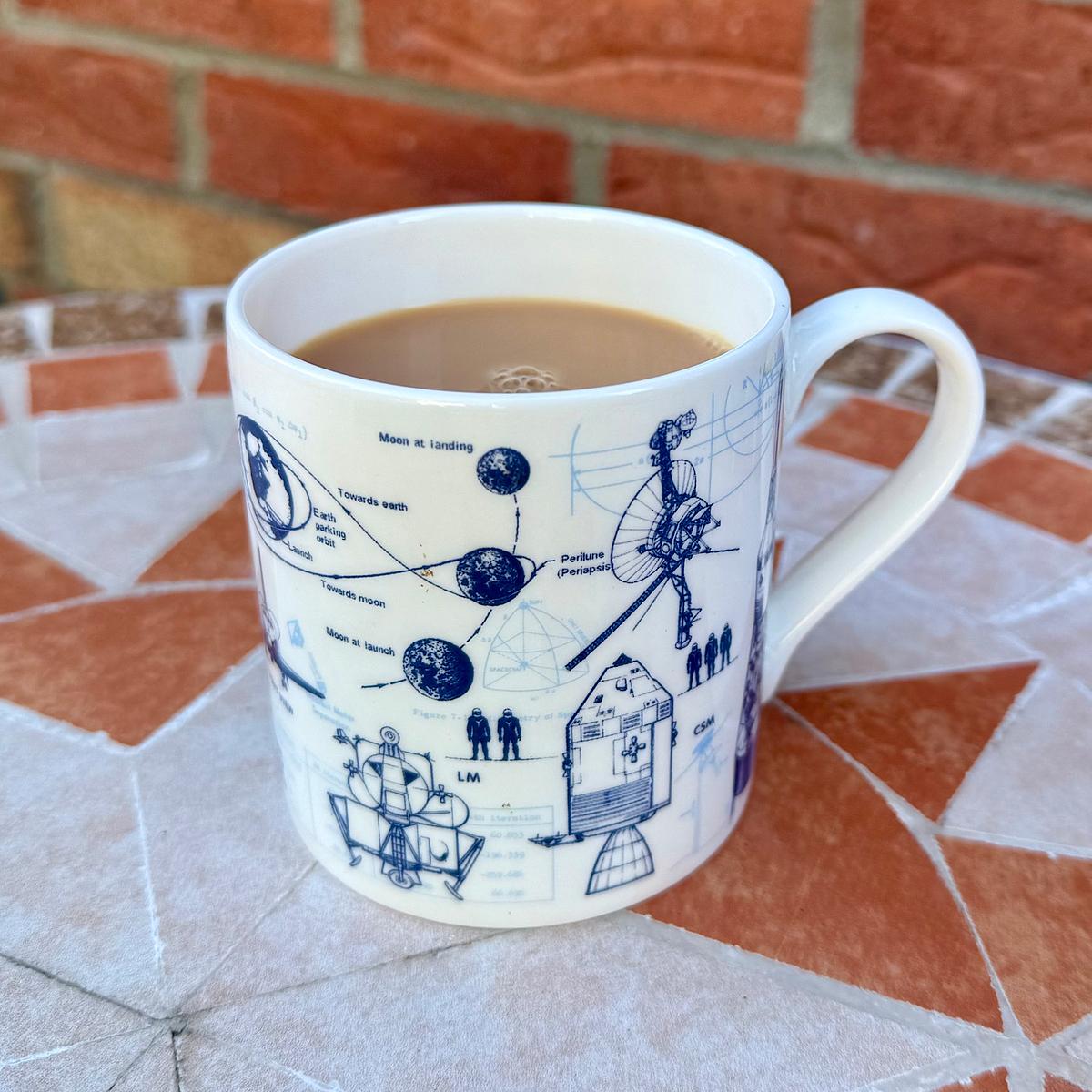
I picked up one of the Atoms to Astronauts mugs this week. I couldn’t pass up on the space edition.
Family guy and web developer
Apps, tools, and gear worth talking about.
I picked up one of the Atoms to Astronauts mugs this week. I couldn’t pass up on the space edition.
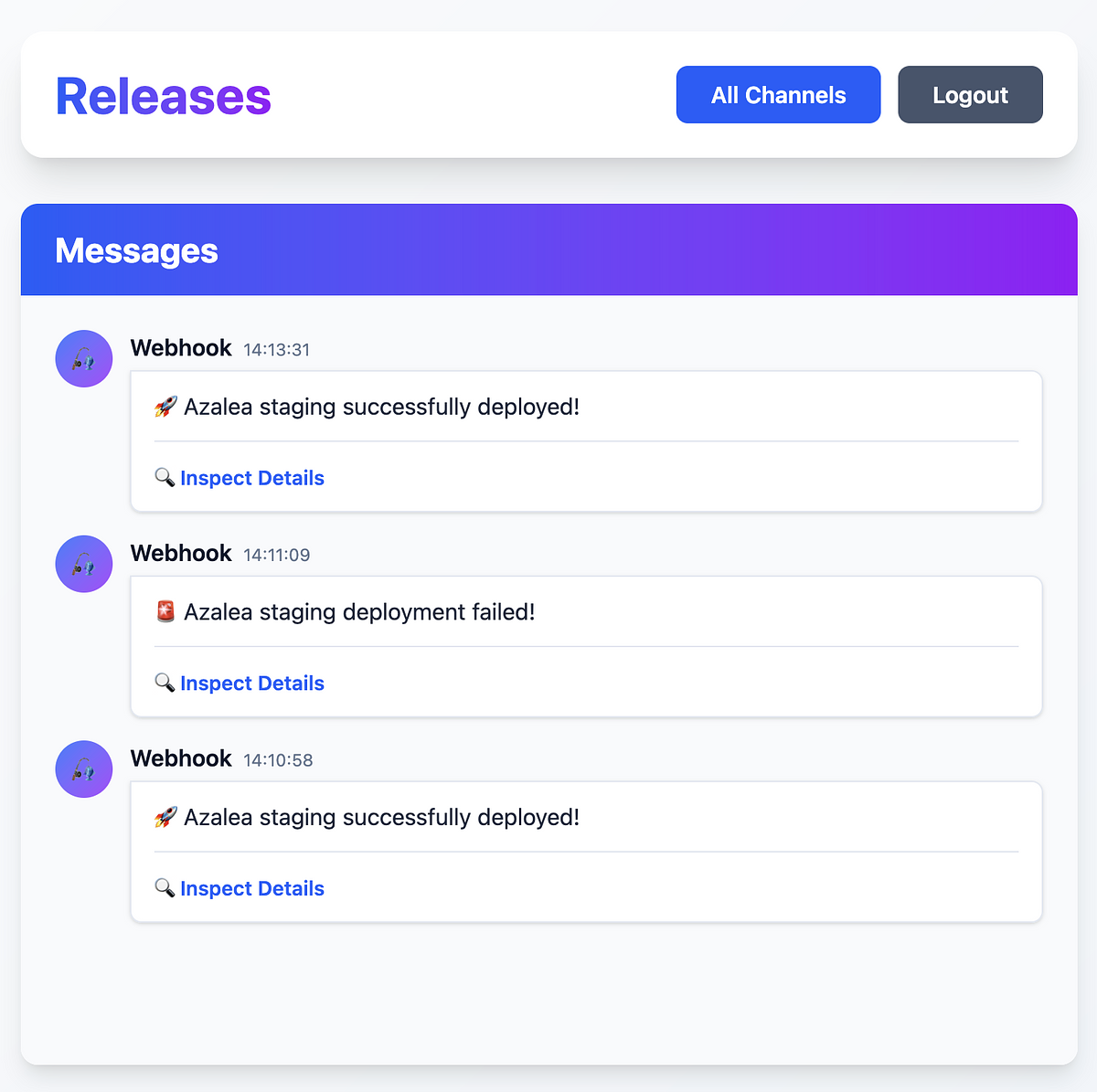
Yesterday, I mentioned that I had created a Slack account just to send webhooks to and that perhaps there was a better way of doing this. After a few hours, I have managed to put together a tool for consuming and monitoring webhooks.
Hooknook (working title) allows me to create channels and send webhooks to different channels. I’ve still got some details to sort out, but the basic application works. Users and channels are made through the Rails console at the moment, and a single endpoint accepts all webhooks coming in. It’s the absolute minimum I could do to get it to work, and now it’s happily accepting webhooks from my Hatchbox deploys.
I used Anthropic’s Claude to flesh out the structure of the application to begin with, and once I had it working, I used Claude again to add some TailwindCSS styling to the screens. These screens are definitely going to get a once-over again, as the purple is a bit garish, but my wife seems to like it, so it might stay, but be a bit more subtle.
It’s been a welcome change of pace to be able to build something in a short space of time, and even better to be able to use it.
Over the next couple of weeks, I plan to explore adding more functionality for Hooknook and being able to handle more webhooks from different sources, including GitHub.
I’m pretty happy not really knowing what Apple released yesterday. What products and information I need to know will eventually trickle down to me. It always does.
There’s a difference between what to build and how to build. I hadn’t given it much thought until today, when I started to realise that I could improve the time it takes me to make an image template for a product of mine by automating the creation of the different classes and modules needed for each image template.
I spent an hour tonight working on a script that generates all the necessary code I needed. In addition to creating each code file, it also generated the absolute minimum amount of code required for each file to run successfully.
When building products, I’ve always prioritised what to build over how to make, but I need to start splitting my time more evenly between the two. Spending time on one can have some profound benefits for the other.
Though there have been some dips since then, interest in the game has, overall, grown. Star Wars Battlefront 2 reached a new all-time concurrent player peak — 35,892 players — on June 22, with a consistent 20,000 people online at any given time. And these numbers are just for Steam; the game is available on consoles and Windows PC on EA’s proprietary launcher, but concurrent player numbers are not easily available there.
— Star Wars Battlefront 2 Is More Popular Than Ever Thanks To A Dedicated Fan Community
I’m not really surprised that this game is still going strong. Despite the rocky start EA had with the loot box system, the game has remained a popular choice. I still play it weekly. Maybe it’s the fact that I am a huge Star Wars fan, but games like Fortnite and Overwatch haven’t remained on my radar, and it’s been a long time since I played either of those games.
I updated my Rails app’s start script to launch Docker containers for PostgreSQL and Redis. I also added a kill script to stop them when I’m done coding. I hope this helps my struggling laptop battery by properly shutting down services.
I’m starting to come round to the idea of replacing my Kindle with a Kobo.
After hovering over the checkout button for months, I finally purchased a second mechanical keyboard. The Nuphy Air75 v2. Unlike my first KeyChron K6, the Nuphy is low-profile but still compact. It also allows for key remapping using VIA as well.
My KeyChron K6 was a good initial step into mechanical keyboards, but I feel I needed something more low-profile and more resistant switches. While typos are a thing for everyone, I made more typos on the K6 due to the switches I picked. While typing, I would frequently mis-hit keys, and it would register the keystroke as the switches didn’t require much force to travel and register the keystroke.
Also, I bought the K6 without trying other switches, so I knew I might eventually change my mind and buy something else. I’ll still keep the K6 and switch between it and the Nuphy. I’ll probably look into getting different switches and keycaps for it before the end of the year.
Hats off to 37signals for making their latest Once product, Writebook, 100% free—well, at least for the initial version of the product. Sadly, there are no other export formats, such as PDF or ePub, but having the ability to publish books on the web is a good start.
Added to “Things I will never buy”.
A travel mug that lets you control the temperature of your drink and find said mug if you lose it. My coffee is too important to leave the mug it comes in standing any longer than one hour or even lose my mug, to begin with. Thanks, but no thanks.
Hey Calendar is now in the App Store!
Sad to see that YNOT in Toronto is closing its doors.
I have several of their products, including two pairs of pedal straps (still going strong) and two backpacks. I’m disappointed I couldn’t pick up another backpack, but it’s good that they’ll continue selling the pedal straps.
I have my fingers crossed that 37 Signals release updated versions of their older products like Tada List and Backpack under their Once approach.
Have we reached peak saturation point with these annual reviews from different products and services yet on how we used them?
My music player, app launcher and bank have each notified me about my review of the year on their service.
Final leaves of the autumn raked up and bagged and tidied up the driveway in preparation for our Christmas lights and wreath going up. A bit of code and coffee this afternoon and that will be a productive day.
Another paper product for the analog nerds. The Sidekick Notepad. Interesting idea, but I don’t think it would actually fit on my current desk.
TextBuddy sounds quite interesting. It’s just a text editor for manipulating text.
A Swiss Army knife for plain text that is there when you need it and hidden when you don’t.
Cancelling my Fantastical family subscription this morning. The price increase for the family subscription from £62.99 to £99.99 is too big a jump for me.
After the cancellation of Setapp, I’m reviewing several other subscriptions that could be for the chop. There’s no average monthly figure that I’m aiming for as a budget for these subscriptions, but reducing them over the next few weeks is the plan.
I cancelled my Setapp subscription today. I’m only using a handful of apps from this, and I know it would be cheaper for me to use alternatives.
I quite like these AirTag strap mounts from ElevationLab. Good for mounting an AirTag on all types of items. I particularly like the idea of putting one on my trusty YNOT backpack.
Over the last few weeks, I’ve been re-writing a small product that I spent sometime building before lockdown.
The product has been gathering dust since the start of lockdown. It does have a handful of customers and generally good feedback from those customers, but I wasn’t happy with my first pass at it. There were so many things that I would do differently if I could start it over again. So I decided to have another go at it.
I’ve made pretty good progress so far and will be able to launch it again in a few months.
Over the last few days I’ve been assessing a number of projects that I have in the works.
The problem with each of these projects is that their largely untested product ideas that have stagnated for too long and will require more time to get back on track than I can afford. Most of these projects are getting killed. I can’t afford the time to explore them further. The remaining couple of projects will be re-written and released as open source so that others can run them on their own.
A paid tier on Twitter? If the benefits were right, I’d definitely go for it.
Today’s plan was to get in a round of golf with my son, my dad and my uncle at my dad’s golf club. I’ve been looking forward to it for a couple of weeks. As always though, the weather has scuppered these plans.
Taking the day to instead work on my product for a few hours.
After some consideration, I’ve decided to kill my Atlassian account. I’m not using any of their products other than Trello. Despite Trello’s benefits though, it can be replaced by a number of tools that I already own.
In the search for a viable alternative to Fantastical, I’ve found that Calendar 366 has a pretty good like for like match to Fantastical’s features and without the subscription. I think this will serve as a good replacement in the short term.
I’m not back to work until the 6th of January but I’ve got some marketing work to do tomorrow for my side product. Not my favourite aspect of building a product but an absolute necessity in this case.
Took a day off from work today, to well, do some work of my own. Pretty productive day.
Curtis McHale has some words of wisdom when it comes to deciding to work towards something more than just a 9 to 5 job.
The things we want are hard, we may fail.
That doesn’t mean we shouldn’t bother trying.
— Good Things Are Hard and Have High Failure Rates, We Should Still Try
I enjoyed working for myself. In faact I loved working for myself. But it came with a risk. The risk was that I focused on long term contracts with fewer clients, so while the long term looked good, I found it difficult to maintain that run of long term client work. Eventually I found myself unable to sustain the work and I started looking for full-time work.
Now, two years later, I’m building a product on the side for a market that I have some knowledge of. There’s no guarantee that my product will be a success though.
Every week I spend a half hour going through some RSS feeds and a Twitter list of organisations that are the target market for my product and a Twitter list of competitors. The market is healthy and there’s plenty of worldwide opportunities for my product, but there are times when I doubt myself and I think the product will fail to take off.
It usually lasts for a couple of days and then I find myself shaking off the thoughts of risk and I through myself into the backlog of work I have to do for the product.
I have to at least give it a try.
CJ Chilver’s reminds us that we can reduce our anxiety by reducing the number of inboxes that we have.
There’s a lot of productivity advice out there about what to do to organize and process your many inboxes. But the best rule is often forgotten: have as few of them as possible.
I still use Feedbin on a daily basis to filter for the important stuff, and I even follow a few accounts on Twitter using it.
The biggest benefit I get from using Feedbin is that I’m in control over what I choose to see and read. That’s a big positive in a time where platforms are pushing algorithms that decide for us what we should read.
Another short-term study on moving to a shorter work week.
Is there evidence though, to still support this when the organisation has been on a shorter work week for longer than a month? How about a year?
I find it amazing that we’re able to do things more efficiently than ever before and yet we’re still working the same number of hours we did decades ago.
In building a product for a specific market, I’ve discovered that the admin interface doesn’t need to be anything fancy. Feedback from beta users is that they like the basic screens.
After today’s news that Google has bought Fitbit, I’ve decided to delete my Fitbit account. This wasn’t a knee-jerk decision based on Google’s ever-increasing grasp of the world’s data, though.
For a few months, my Fitbit Alta hasn’t seen the light of day due to abysmal battery performance. I was lucky if I could get it to last 24 hours. I have been looking at a replacement Fitbit for a few months, but nothing really stood out as being a worthy replacement. Today’s news that Fitbit have being acquired by Google was just the last nudge I needed towards looking elsewhere.
I’ve been curious about an Apple Watch for some time, but I haven’t quite found the need to buy one. I must admit, I do prefer the idea of just having a watch, but there’s something about the Apple Watch now that has started to grow on me.
One last thing. It seems that no matter what size of company you are, there’s always going to be a more prominent company that will eventually buy you out. It puts me off thinking that I can get behind a company who has an innovative new product. It’s a good chance that eventually they will end up being swallowed up by someone else.
Ghost 3.0 now includes memberships and subscriptions.
As of today, Ghost is the first totally independent product out there with publishing<>subscriptions deeply integrated at the core, allowing anyone to build a recurring revenue subscription business.
I used Ghost for a while for my blog. Eventually the cost was something that I couldn’t justify and so I switched. However, with Ghost’s new memberships and subscriptions, they’re definitely going to attract the attention of many content publishers.
I had no idea that Basecamp offered a free plan for smaller teams and individuals. Is this a recent change in their product or have they always had this?
For the last few months, I’ve been building a content management system aimed at a particular industry.
I’m close to finishing the first working version of the product. There are still a few things to do, like account management and theme options, but these are trivial things that will not present any problems.
While reviewing the CMS source code this morning, I spotted a way that I can refactor a part of the CMS. The change involves simplifying the different content from multiple types of content to a single base content model that I can base other content on. This is a significant structural change to the product. It involves changes in how the CMS presents and manages the content.
If I spend the time making the change now, it would be much easier to handle any created content and migrations of data in the future.
If I schedule the switch for later on after the release, I’ll always know that I have this change in the structure to make and will be presented with an increasing problem of migrating data.
Thinking on it, I like the idea of taking the hit now and getting this right before the product gets released. I’m just wondering now why I didn’t see this before when I was modeling the content for the CMS.
I’m starting to wonder if running a side product is worth the hassle, given the amount of regulation on privacy and payment processing there is now.
Maybe it’s time to do something about the ways in which shipping containers are transported across our oceans?
Trainers, flip-flops and a selection of other footwear were appearing with a regularity that singled them out from the other tidal deposits.
They were the same brands, in the same styles, and, for some of the trainers at least, the same production dates were printed on a label sewn into the tongue of each shoe. Moreover, every item of footwear appeared to have been unworn.
In the months that followed, Mr Ribeiro retrieved about 60 Nike trainers, along with a host of other brands.
A single shipping container can contain hundreds of man-made products that if not secured to this ship, can end up being leaked into the world’s oceans. These end up being washed up on our shores, but also will break down in the ocean adding to the already big problem of plastics in our oceans.
I like this.
Each piece of work is a mere pebble tossed into a flowing river. Maybe your pebble will become bedrock—sticking around for a long time and altering the water’s trajectory. Or, maybe it’ll quickly dissolve into dust when new pebbles come along and crash into it. Both of those outcomes are completely natural and worthy of celebration.
Having worked on several different products, I can attest to the highs and lows of seeing your ideas implemented but ultimately replaced over time. The hard truth is that as soon as you commit your work to the product and it’s released, it becomes the target of scrutinisation by both the product team and the people that use the product.
Ultimately your work will be replaced over time, but it’s all towards the greater good of learning what’s best for the product and for those that use it.
I’ve been trying to solve a problem for a software product that’s been at the back of my mind for the last few weeks. This morning I sat down with a coffee, tried a few things out and eventually worked out the solution. Feels good when you overcome a hurdle like this.
In the last couple of weeks, I’ve been slowly getting back into using Vim as my default text editor.
Even though VS Code is really popular with developers at the moment, I’m not a big fan of using Electron-based apps. Also, VS Code’s popularity has been killing off some packages that I use on Sublime Text, which effectively kills that off as well. I did try to move back to Sublime Text, but I’m not finding it anymore productive than VS Code. Which brings me to Vim.
After many attempts at moving to Vim, I can still remember the keyboard shortcuts for many commands on Vim, so I haven’t been at a total loss in getting started again.
Great advice for those building new products.
At both Viaweb and YC, every minute I spent thinking about competitors was, in retrospect, a minute wasted.
Killed by Google is a reminder that although the Google search engine has been around for over 20 years, many of Google’s products have a much shorter life span. Google’s products are more akin to long term product tests than actual products.
I’m getting good feedback on an idea for a new service and product.
The next step is to create a website and engage with a wider audience for the service and see what the feedback is from the market using a combination of content on the website and social media.
I’m winding down my freelancing business over the next few weeks to take on a permanent role. It’s been fun over the last six years, but I think I prefer the stability of regular hours and pay.
I haven’t given up on going solo though, I’m still considering running my own business in the future. It will have less of an emphasis on the selling of services though and more of an emphasis on selling a product.
MoviePass is losing money, not as appealing as when it first came out and now being sneaky with their subscriptions. Am I alone in thinking that MoviePass should just call it a day?
The Expanse is coming to Amazon Prime!
Great timing. I just cancelled my Prime subscription a few months ago.
Sad to see great Twitter clients being eroded away.
I’m increasingly wary of podcasts where the end of episode “picks” by the hosts and guests are the products and services of fellow hosts of the very same podcast. If that’s the extent of the picks for that episode, then I start to wonder where the value is in listening.
With no hard launch date for The Last of Us 2, God of War, might just be the game that can fill the gap before Joel and Ellie return. 🎮
Michael Wade provides another gem of being productive.
One important thing today, that will put this day far ahead of days when you hoped to achieve much but scattered your focus on trivial matters.
— If You Do … by Michael Wade
Me? I’m just looking to complete that one important thing a day.
Frustration is a blog post that doesn’t link to the products that it recommends.
Trying to put together the parts for a monthly newsletter aimed at both Rails developers and Rails product owners/team leaders. We’ll see how it goes.
I can’t say that I’m a fan of seeing high-speed Internet access being rolled out onto airlines.
Why is it that flights often make for good working conditions? In spite of all the discomfort, there’s something zen-like and cloistered about being in an aircraft and incommunicado. Particularly when lights dim and people are sleeping or absorbed in their movies with headphones on, it’s easy to get in a zone with the material you’re looking at, on a laptop or from a printout.
— Free in-flight wifi means we’re quickly losing an unexpected haven for deep productivity
If this happens, why bother putting windows in the aircraft? No-one will be looking out them anyway.
I have never read The Art of War, but I've seen this quote enough times mentioned elsewhere (other books, games and of course the Internet) to know that it comes from Sun Tzu's book on military strategy and tactics.
Let your plans be dark and impenetrable as night, and when you move, fall like a thunderbolt.
— Sun Tzu, The Art of War
I recently spotted this quote during a gaming session on Call of Duty: Modern Warfare Remastered. In between scenes a quote from history appears on the screen.
It got me thinking about the trend towards crowdfunding for products and how transparency is often thought of as a good thing when it comes to building products.
With the recent surge of crowdfunding, you might think that you have to have an idea to tell the world first before it can be successful. It's not always been this way though.
Before Kickstarter, before crowdfunding, before the Internet successful products were built without customers knowing too much about the products until after there were launched.
I wonder if in the light of all this crowdfunding that it's time to consider working on products in a new way? Building the product under the cover of darkness, without the world knowing. Then when it's ready, deliver it to the world. Letting it fall like a thunderbolt.
We live in an age where everything we do is shareable and only a click of way from others knowing what we're doing. It not only applies to what we do in our own time, but also what we do when we're working and that include what we work on.
In some cases it's a good idea to get crowdfunding for a product. You can test the market and get the financial backing before the big push.
Perhaps we might want to consider the opposite as well. If we spent our time working on something without anyone knowing about it, could we capitalise on it and thereby surprise people's expectations?
Not your usual productivity hacks. I do think I could be doing with less distractions during the day.
If you’ve found yourself distracted by meetings, notifications, and phone calls, it’s important to put the brakes on that vicious cycle. Don’t allow time to slowly melt away and put off today what you believe can be done tomorrow.
— 3 powerful ways to hack your life, find focus, and get more done by The Verge
Medium announced it's paid tier called Memberships. I'm not convinced though.
Sure it's great that Medium are finally charging for their product, but there isn't enough value here.
You can count me out.
We launched Ghost about 4 years ago with a $300,000 Kickstarter campaign. Today, it's a sustainable healthy independent business with $750,000 annual revenue and a team of 10, and users including NASA, Square, Vevo, Sky News, Mozilla, Zappos and so many more.
Proud to be a Ghost user and looking forward to seeing what else the Ghost team can add to an already great blogging platform.
Second newsletter of the year sent out using @tinyletter. Great product for managing a small newsletter.
The bike industry is bad enough with it’s annual product cycle and “industry standards” without having to add market specific models.
Productive morning at @BLENDTogether in Paisley with good music in the background. I should work here more often
Cal Newport touches on single root commitments and productivity.
The solution to these issues is simple: maintain a single root commitment, that you’ll stick to no matter what, which will in turn help you get the most out of all the other productivity commitments that come and go in your life.
To be more concrete, create a single page document that describes the key productivity rules, habits, and systems (which I’ll summarize as “processes” in the following) that you currently follow in your life.
— On Rooted Productivity by Cal Newport
With the new year just around the corner, it's always a good time to clear the decks and start afresh. A few things I'll be doing today:
If you're at a loose end today, clear the decks. It's as good a time as any to start getting ready for a fresh start.
My favourite mobile phone case company Otterbox are now expanding their product line to include chargers and headphones.
I'm pretty much tied to my Apple EarPods (not the wireless ones, they look ridiculous) as they serve my needs. I also have a reliable Anker charger that I use when I'm out and about.
I'm intrigued by the products that Otterbox are now offering but it will take a few good solid reviews to make me part with my cash.
The makers of Telegram have launched a blogging platform called Telegram.
Yes, it could be used by nefarious internet trolls, but I would like to think that it will be used in a more positive way.
Trello to JIRA. What’s the advantages from a client (product owner) perspective?
I'm glad to see that the much hyped part of the retail year, Black Friday, is falling out of favour with buyers.
But there’s something else happening. In this moment of profound innovation on the back of e-commerce and technology, new and old brands are working hard to gain our business. In doing so, they have created a virtual “series” of “Black Fridays” throughout the season. These are cause-driven moments or limited-edition collections that add value in a way more relevant to today’s informed consumer; it’s not about false discounts.
— Black Friday isn’t dead. It’s just irrelevant. by Recode
I've always shunned purchasing anything during this time and in particular any product that is highlighted as a "bargain" during this event.
Can't wait until it's completely gone.
Well premium subscriptions are free now.
Love these. Especially the news page.
Curtis McHale on the placebo that continually changing your productivity tools offers and why it's best to stick with the basics.
For a time a new system feels great and we do get more done. But then the problems surface and the problem is how we use the productivity tools. A new productivity tool or strategy is almost always a placebo for your poor productivity habits. The only utility in these new tools is often that they let you think you’re doing better when the cruft hasn’t built up yet.
— Why you shouldn't change productivity systems by Curtis McHale
Start small. Start with just the smallest version of your idea and a way to manually make it happen. You can automate later. You can add more to it later. You can test the waters without a massive investment of your time or your money, and see what happens when people start buying it from you. That’s actually a much smarter way to launch.
— Define your “need to haves” vs “want to haves” by Paul Jarvis
I love this. Sound advice for anyone looking to turn their idea into something real.
It appears that Twitter is dying. It's losing money and credibility. John A De Goes looks at the major problem Twitter has. It's a product.
Turning my ideas into reality is what I want the most out of life. So that’s what gives me the deepest happiness.
Then I realized that all the best, happiest, and most productive times in my life, were when I was completely cut-off.
— Disconnect by Derek Sivers
This is it. The last part of the Grass Roots Productivity process. Doing the work. Unfortunately there’s no quick fixes or hacks to this one. You either do the work or you don’t.
It doesn’t need to be as black and white as that though. There are things you can do to help you have a productive day. I always come back to Peter Bregman’s book, 18 minutes. He has a simple rule for getting something done.
If you really want to get something done, decide when and where you are going to do it.
— 18 minutes by Peter Bregman
When you decide where and when you’re going to do something you add structure to your day. This structure leads to a plan day for the day is more manageable. If you’re like me then the location will rarely change for most of your work. Time though is one thing that's a big impact on our day. So decide when you want to do a task so that you can split your day into more manageable chunks.
I’ve tried in the past to pick off items from the top of the list at the start of the day. This is the wrong thing to do. It often leads to confusion and the wrong things getting done at the wrong time. I’ve learned now that scheduling actions into my calendar ahead of time is a better way to get things done.
Doing the work is all about self discipline and honesty.
Discipline yourself so that you do the work set before you. Schedule in your calendar the tasks that matter. For every one task that needs to be done, there's four other that could be done. Never mind the other four and focus on the one.
And when it comes to reviewing your progress, be honest with yourself. If you could have done better then aim to improve your work and your progress on the next block of work.
This is the step where many people falter when it comes to using a process, but only you can make it work. So do yourself a favour and do the work.
We've got a list of actions from a few days of capturing. Now what do we do? We schedule. And not by just putting whatever we want to do in any free space on our calendar. We schedule by putting the right tasks in at the right time.
Take a moment to look back at the last few days or even weeks of work you have done. When do you peak and when you do you plummet?
I work better in the morning. It's during this time that I like to work on more creative tasks. Building new features, sketching screens and of course wrditing. For these types of tasks, this is when I am at my sharpest.
In the afternoon I prefer to work on more problem-solving tasks. Debugging, refactoring and general problem solving through code. I find this type of work less intensive than creative work so I prefer to do this in the afternoon.
How you work is down to you. But you need to be able to identify when you're most productive. It's important to ensure that you are scheduling the right tasks in at the right times. Dropping tasks in your calendar is going to lead to unproductive days.
Now that you know when it's the right time to do the right tasks, you can start scheduling those tasks in. I've tried many ways of partitioning my day but the one for me that sticks the most is being able to work in 1 hour blocks. 50 minutes of work with a ten minute break. It's almost same as the Pomodoro Technique, I just opt to work in longer chunks of time.
I also only schedule in tasks that take no more than an hour. When it comes to any kind of work I break down tasks into one hour chunks of work so that I'm focused on one thing at a time. Once a task is complete I can move onto the next task for the next hour.
Scheduling is an important part the productivity process. Done right, it will help you work through the right tasks at the right time and give you the sense of making progress. And that's what being productive is all about.
Great advice for programmers and anyone building a product.
In this mindset, each day your task is to fight from failure to success. You no longer are so willing to compromise, or to sweep seemingly small challenges under the rug.
Instead, you aggressively seek out challenges and problems, and attempt to eliminate them in order to salvage the already failing project.
— Failing on Day One by Thoughtbot
Fellow Scot Ian Dick highlights some areas of technology where Apple are falling behind.
Apple also seems to be out of the AR/VR loop. It’s computer hardware can’t drive an Oculus although on the mobile side it could easily launch AR support as the hardware in the iPhone is extremely capable.
— Placing Bets by Ian Dick
I can't help but wonder though if things like VR are at the stage where Apple or any other company should be worrying about it.
I think of social media as one of those necessary evils in life. I'm well aware of the benefits of globally connected platforms that keeps people in touch, especially in the event of a natural disaster or event. Social media has proved itself as great way to keep people in contact with others. Like I said, that's all good, but a good social media platform has value. Things that interest me as a consumer. Links, text, images. Anything that falls within my interests is valuable.
Lately it seems that Twitter has been failing in this respect. There's doesn't seem to be any value in Twitter anymore. I'm in a constant battle of finding people to follow and unfollowing people that don't tweet anymore. This wasn't a problem when I first used Twitter as I could see the value from my timeline. Interesting tweets and links had value and it kept me checking into my timeline on a regular basis. Now, it seems that I can go a couple of days without checking Twitter and not miss anything.
I was an early user of Twitter. A year after it launched I created my Twitter account. After a few years though I wasn’t seeing the same value that I seen in the early years of Twitter and so I closed my account. I ended up re-creating my account on Twitter last year. There’s a problem though. The problem lies in the fact that I haven’t a clue what I’m using Twitter for. Since starting my Twitter account up again, I’ve had a few interactions with others and it serves it’s purpose in a few areas, but mostly I’m wondering if I even need it at all.
These days though I'm stepping back from Twitter and using it mainly as a source of content to consume rather than to publish things. I’m also keeping my use of it sporadic. I’ve noticed a few other people are changing the way they use Twitter as well. People that I know would tweet all through the day are now down to just tweeting a handful of times a day at most. I’ve even stopped using tools like Buffer for sharing content. I just don’t see the need in tools like that when I’m more of an infrequent visitor to Twitter.
So is Twitter still valuable? I think it’s largely lost it’s value for me. I only check it a couple of times a day. Twitter has it’s uses but I don’t see the great need for it like I did a few years ago. It still has a value for my freelancing business and I'm in the process of moving some of the people I follow to that account, but that is a topic for tomorrow's post.
Smile have adjusted the pricing of the new TextExpander subscription service.
We will apply a lifetime discount of 50% off the Life Hacker pricing to customers of any past version of TextExpander. That amounts to just US $20 per year. In our initial rollout, we offered the discount for the first year only, and that was a mistake. We value our long-term customers, and it’s important for us to demonstrate that in our actions. Thanks for bearing with us as we sorted this out.
I like the new pricing for current owners of any previous version of TextExpander. $20 per year is a more affordable amount. As well as this Smile have said they will continue to maintain versions of TextExpander 5 as well as 6. I'm skeptical about how long this will last though. With that in mind, I don't think I can rely on an app that may or may not be around in the future.
I switched to aText a few days ago and I don't see myself switching back to TextExpander anytime soon. aText is working well enough for me and the reduced cost for what is a minor utility app has prompted me to start cutting back on other subscription services that I use.
If in the future though, I see a genuine need to use TextExpander over what I have at the time, then I'll know where to find it.
Can’t say I’m a fan of the new @textexpander subscription. I like paying for software I use regularly, but $50 per year! No upgrade for me.
I love this idea of paying a subscription fee for using Twitter, but I fear that it might be too late for Twitter.
Before you scream at me to tell me I’m a dope for suggesting this to Twitter, let me give you this tease: Like anything in this world, in the most efficient economies, you get what you pay for. There’s a bright side in paying and that’s a better user experience. It’s why there are so many apps in the Apple Store that have a regular version, which you get for free, and a Pro version, which you pay for.
— My $4.5 Billion Gift To Twitter by Darren Rovell
I've not been a fan of the whole Twitter experience since signing up again and I'm getting little in value from it. This is largely because the people I follow (who were regular tweeters in the past) are no longer that active. There are some benefits, but most days I never check my timeline and instead steer towards a couple of curated lists I have.
ISVs that invoke insane levels of protection on the demoing of their products are closing the door on potential customers everyday.
Are ISVs like this so paranoid about their product that they have to restrict access to videos that demo the features of their product?
Props to the @highrise support team who replied to my support query this morning. Great product and great customer service.
Last week I was toying with the idea of switching from Todoist to Wunderlist. The quick path out was to switch to Wunderlist and start afresh. After a couple of hours though, I realised that even though Wunderlist is a perfectly good task manager, I missed the simple, clean interface of Todoist. I missed the Karma feature that let me do weekly reviews and whole host of other nice features that I had become accustomed to.
The problem wasn't the task manager itself, it was because I allowed my task manager to become too complicated. In the last three months my Todoist account has become cesspool of overdue tasks, dead projects and a garbage pile of labels.
I quickly switched back to Todoist and cleared everything out of my Todoist account. I removed all tasks, labels and projects. Having a blank slate to start with meant that I could simplify my Todoist account and start again with just the essentials. The process of clearing out my task manager was exactly what I needed. I just didn't see it until I looked at the pristine list of first tasks in Wunderlist.
Starting afresh with your task manager might seem daunting at first if you've invested time and energy into getting the right workflow for yourself. I thought I had a good workflow but in fact it was just a mess of confusion and it left me being rather unproductive towards the end of last year. Simplifying my task manager by starting with a clean slate means I can get back to the process of finding out what works again and ensuring that it stays that way.
Caesura Letters, my daily dose of deep reading, is now freely available for all. I've been reading this from its early days on an almost daily basis. It does go a lot deeper than other subscriptions but that's the joy of it.
The plan is to reserve the staging environment for pushes from the master branch. Once tested (again) it can then be pushed to production.
I wanted to make a product and sell it directly to people who’d care about its quality. There’s an incredible connection possible when you align your financial motivations with the service of your users. It’s an entirely different category of work than if you’re simply trying to capture eyeballs and sell their attention, privacy, and dignity in bulk to the highest bidder.
I’m going to pull out another trite saying here: It feels like honest work. Simple, honest work. I make a good product, you pay me good money for it. We don’t even need big words like monetization strategy to describe that transaction because it is so plain and simple even my three year-old son can understand it.
— RECONSIDER by David Heinemeier Hansson
A nice reminder that honest work and a good product can be a way to succeed.
Interested in working with me?
Fill in your details below and I’ll get back to you within 24 hours.
In the last few months I've made an interesting discovery. I'm crap at building and marketing products. Really bad in fact. From now I'll just build stuff, give it away for free and keep plugging away at the client work. I'm happy with that.
In a shock turnaround, Marco Arment has pulled his ad blocking app, Peace, from the App Store. Later on Apple also started refunding everyone who bought it on the App Store.
Achieving this much success with Peace just doesn’t feel good, which I didn’t anticipate, but probably should have. Ad blockers come with an important asterisk: while they do benefit a ton of people in major ways, they also hurt some, including many who don’t deserve the hit.
— Just Doesn't Feel Good by Marco Arment
I admire Marco's decision to step back from the ad blocking market. I wonder how many others could turn their back on a successful app?
... here's The Art of Manliness with their take on kaizen.
The Kaizen approach to self-improvement completely circumvents the unproductive ups and downs all too common to the quest. By breaking down big, overwhelming goals into super small, discrete pieces, Kaizen encourages action. The small successes you experience with your baby steps feed on each other and start building some momentum, which leads to taking bigger and bigger actions.
— Get 1% Better Every Day: The Kaizen Way to Self-Improvement
by The Art of Manliness
Patrick's journey on the Buddhist Noble Eightfold Path continues with the right livelihood.
I use the concept of Right Livelihood to remind me to keep my focus on doing work that contributes to the greater good, that is meaningful and helpful to those that choose to purchase my products and services, to humbly realize that any failures or successes will be fleeting, and that the most mindful path is to simply continue to do good work.
— Right Livelihood
by Patrick Rhone
Work begins on a couple of software products. I'm not getting too wrapped up in the finished product, it's just too distracting.
This brings back nightmares of timesheets being used to measure performance. It's a poor way of measuring any employees performance regardless of what they do.
What do you use to measure employee performance? For many years I worked in places where time was what I was paid for and so work time was what was measured.
This became a problem when I’d see other people spending the day on Facebook and still getting paid. They produced nothing, but production wasn’t measured, time in seat was. So by that standard, those employees were doing what was required.
— Measure the Right Things
by Curtis McHale
The Bradley Mountain Waxed Canvas Utility Roll is one of those products you're going to own for a very long time. Love those kind of products.
Michael Wade sums up well what being productive means:
This means working with deliberation and not by impulse. I must elude a multitude of distractions.
— Going Down the List
by Michael Wade
I work four days a week when a client allows it and most usually do but I will make exceptions for projects that are on a limited timescale. Working five days a week for a couple of months is nothing to me but for full-time employees it can amount to a daily grind which can take its toll on employee productivity.
We’ve proven that you can take it from an experiment into something that’s doable for real companies and real people in highly competitive markets.
— The Case for the 32-Hour Workweek by The Atlantic
Watch the video at The Atlantic for more.
... says no. That and other great tools for greater productivity.
First time searching for Twitter in the App Store. Gone are the multitude of good client apps and replaced by “follow boosting” apps.
I'm generally not, but that's okay.
If we didn’t have any early adopters ironing out the kinks, there’d never be a now-safe choice for the late majority. And if everyone always jumped on the latest thing on day one, society would waste needless cycles churning through the broken glass of beta software.
— The Stories We Tell Ourselves by Signal vs Noise
I now know that I bring scale to the products that I wait for.
... are willing to pay for your product or service. You'd be surprised just how many.
A quick summary from different reviews of the Apple Watch.
The Apple Watch is the best smartwatch on the market, the reviewers agree. And it does some interesting things. But it’s not essential.
This is different than smartphones, which became addictive at first use and were obvious, must-own devices. It sounds like the watch still needs some work before it’s great.
— The Apple Watch reviews are in, and they’re uncharacteristically meh across the board by Quartz
Ever since the first official news that Apple were going to be releasing a watch, I've been skeptical of it's initial success due to the fact there wasn't a single feature of it that made me want to buy it.
My take on it is that I don't want another touch enabled screen to distract me, I've already got one.
If I had to buy something for my wrist that fell in this category of technology, I would have to say that something like a Fitbit, or even Microsoft's Band would be something more up my street. Mostly for the health tracking benefits.
It's still early days though for the Apple Watch and given Apple's history of products it's fair to say that a more streamlined Apple Watch is probably already being planned.
... and his drive to keep Dropbox being a successful product.
Excellent interview with Dropbox's founder. I've been a happy Dropbox user for years. I see it's single biggest benefit has being platform independent. You can run Dropbox on Windows, OS X and Linux. If and when I decide to switch from OS X, it's good to know that I can take everything with me.
Expecting free upgrades for the complete lifecycle of a software product is ridiculous.
The Microsoft Universal Foldable Keyboard doesn’t have the greatest product name but good to see MS building a product for other platforms.
Haven’t looked back since cancelling my Amazon Prime subscription. Rather than relying on next day delivery, I just order in advance.
I've been working on a new idea for a service for the last few weeks and I'm just about ready to take the wraps off it. While the core functionality of the service is happily working, I've been thinking a lot about the pricing strategy for it.
I considered giving a basic level of functionality away for free, but the problem I have with this is that it is difficult to work out just what to include when you give a service away for free. Too much and you end up with more customers sitting pretty on the free service, too little and it's hard to get customers just to sign up. There's also a little bit more work involved in separating the free functionality from the premium functionality in a service. You have to ensure that the free tier of customers can use the application at the same time as paid customers who will have added features available to them.
Given that I prefer this pricing strategy for the services that I use, I found it strange that I didn't sway towards this from the start. When you make a product or a service, you want people to use it and the easiest way to do that is to provide part of it for free. It's certainly not the best strategy for getting lots of sign ups, but it is the easiest.
I hesitated on using a paid strategy to begin with because I wanted people to experience the service first in it's entirety before deciding to pay for it. The only way to do this then is to give people a free trial period of the application in it's entirety. No locked or restricted features, just a window of time to try the whole application before they decide whether it's for them or not.
And that's what I am sticking with. A paid strategy with just a 30 day window to try out the application for free before the customer has to decide whether to subscribe to the service or not. I think it's definitely the best strategy. Committing to a paid service or product means that you are more accountable for the success of it and therefore you are more likely to want to make it succeed.
I've had positive feedback on this already, but the only way to truly see if the service will be a success is by releasing it to the world and that will hopefully happen in the next couple of weeks. Stay tuned!
Curtis McHale asks if success is only in your head?.
Well worth reading if you've failed in the delivery of a product or service and are second doubting yourself.
It's that time of year where you should be thinking about goals and plans for next year. Here's a little tip. Try measurable goals.
2015 is just around corner. Just over two weeks in fact. For many the setting of goals and plans for next year won't begin until that period between Christmas and New Year. Right about that time where the over-indulgence of food will probably lead to a planned diet for the length of next year but will most likely only be until the second week of January. I learned a long time ago that setting such goals and plans on the eve of the New Year rarely last beyond January.
Such goals often fall apart simply due to them being set in such a short period of time with little thought to making actual plans to achieving those goals. They also rarely succeed due to the fact that there's no clear end goal in mind. If your goals are financially related, why not think about the amount of savings you have just now. How much more would you like to have in savings by the end of next year? If your goals are health related, think in terms of improving the numbers you have now. What's your time for a five minute mile now? How many seconds do you reckon you can take off by the end of next year?
At the end of last year I set myself a few goals. One of them was the total amount of income I wanted from my freelance work. I had a figure in mind that was more than the previous year. A good 25% more in fact. I managed to hit that goal this year with a steady stream of work coming in. Next year I'm increasing that figure again by a further 25%. With the projected work I have for next year, that figure can't be gained by invoicing clients alone, it will require me to start thinking about income from products and services as well as perhaps re-negotiating my rates before the start of the new financial year in April.
A measurable goal is much more achievable when you define the figure you have now and the figure you want to achieve. It doesn't need to be a goal for the whole of next year either, it could be a attainable in nine months, maybe even six. The point is that a measurable goal is an attainable goal.
I love the idea of incorporating monthly themes into the calendar.

Each month leaves a space on the first day to enter your Monthly Theme, and you can also theme your weeks as well if you wish. These themes will act as catalysts to inspire you to move the projects forward that you want to complete and the goals that you want to turn into reality. By planning these things now, you’re setting yourself up with a better chance for success in the future. And The NOW Year Calendar keeps the plan front and centre in a design that is both simple and stunning.
Love the look of these device stands.
I'm a big fan of both Mike Vardy and Patrick Rhone, so I was really pleased to see Mike had asked Patrick to be a guest on his Productivityist Podcast. Listen and enjoy as they chat about ideas, task systems and other great stuff.
I usually don't install games on my iPhone, but after hearing about Battleheart Legacy I just had to give it a go.

Having played D&D as a kid, I immediately loved this game. Character classes, attributes and a world to venture in to gain experience points. And best of all, no in-app purchases!
Available on the App Store.
Microsoft products have waned with me over the years, but their new product, Band, definitely got my attention today. Also glad to see that they have apps available on all major app platforms.

Free services are the most popular way to attract users, but what are you compromising on for this to happen?
The word 'free' is still a popular way for many online services to gain the users they need in order to start becoming more than just another blip on the Internet radar. With that enticing offer of being free, most people sign up, use the service and then decide if they want to keep using it or not. The pull of being free can be a powerful thing and like so many things people like it when they get something for free.
In the beginning users of the service are happy. They can't believe their luck that this service is free and they can use it on a daily basis. They love the new service and sing its praises to their friends who in turn sign up as well. It is free after all. The trend continues and if the service is a hit it can eventually scale to becoming the next big thing.
After a few years, the service owners wants to start making some money, but they don't want to charge their loyal users for the privilage of using their service. That would be a terrible idea. Instead the service owners decide to change some things about the way the service works. Maybe they limit the API, change a well liked feature to what the service owners think is better (for them anyway) or even just start throwing some ads in. That last one always works right?
Alas the loyal users of the service start to feel like they have been cheated and throw their arms up in the air in objection to the new changes the service are implementing. Just because they have been loyal to the service since its early days, it's wrongly assumed that the service owners are going to listen to their users. Sadly they don't. And then an amazing thing happens. Despite the drawbacks to using the service with the new changes they don't approve of, the users decide to keep using the service. It's not about free anymore though, it's about the people your connected to using this service. How will you ever connect to these people without this service?
Clearly I'm taking a few examples from social networks like Twitter and Facebook, but the rules apply to any service that starts out being free and refuses to entertain the idea of a paid account or subscription. The rule is that in order to gain the user base you need to become a smash hit, you need to make your service free for everyone. You need to make it instantly attractive for people to use and that starts with giving it away for free.
It's a plan that has been played out with many services now and while there have been successful exceptions to this (well done Trello), many free services stick to being free and then try to generate revenue by using brand advertising and promotion or selling data as a product to others.
It's at this point where the idea of a free account is nothing more than a compromise. In exchange for using the service in question, you must be prepared to accept the changes to the service and continue using it as best as you can. You might not like the changes that the service are implementing but the decision to continue using it or leave the service is down to you. You're the user after all.
This is the cost of many free services now. If they don't require something back from you in return now, chances are they will in the future. It's just a matter of deciding how much you're willing to compromise on to continue using the service.
I would love to have one of these Weston phone pouches sitting on the shoulder strap of my Gulper.

Sicne I started using DuckDuckGo as my primary search engine last year, I've had to content myself with what was an aging look and feel to their search results. While Google and Yahoo were charging ahead with redesigned search result listings, DuckDuckGo was falling behind. Thankfully though DuckDuckGo recently upgraded their search page.
The new user interface itself is a welcome upgrade to the old one interface. With tabs for images, videos and products, searches become much more useful depending on your search term and the search listings themselves are easy to scan. There is also a section with more details about your search term if it's a person, company, product or brand name.
Not only does the new user interface work well on desktops and laptops, but it's mobile friendly as well. I've frequently use it now on my iPhone rather than the suggested search engines that Apple includes. Without jailbreaking my phone though, there's no way to make DuckDuckGo your default search engine on the iPhone. I'm hoping that this will be an option in the future.
The next step I hope is that DuckDuckGo updates their iOS app with ability to do searches there and pass the results into Safari. There might be restrictions on this, but it's what I would like to see.
I'm glad to see that DuckDuckGo are keeping their search engine modern and relevant. It might just be a change of look to the search engine, but sometimes that's all that is needed.
.. are you being productive with the work tools you have?
A nice reminder from Productivityist that apps are tools just like other tools and need to be revised every now and again to see if they are working for you.
Yesterday I got a hold of my credit card statement. This is the statement for the credit card that I use for my freelance business. Web services, hosting, e-books and subscriptions all go on it. It's not wildy extravagant. Last month I spent just under £100 on products and services for my freelance business. I can definitely cut back on a couple of services I subscribe to and choose lower pricing plans, but there's another area where I can make savings.
Each month I pay a small amount to subscribe to a number of different services. For most of these services I'm happy to pay the monthly amount. It's always under £10 with the exception of one. Not a lot of money, but over the course of the year those add up.
Where I'm not saving money is paying the monthly subscription amount for these services rather than the annual amount. Most online products and services offer an annual discount that means you pay less for that service over the year. You do however have to pay for the annual service up front.
As I'm trying to keep a reign on my spending, I would love to switch to paying a once annual amount for these services, but with there being a handful that I can do this with, I'd rather not do it all in the one month. It would just cost too much money in the one month.
The alternative then is to stagger annual service subscriptions. Starting in April, I'm going to switch one service a month over to an annual subscription in order to save a bit more money. I'm already using these services on a monthly basis and have done for the last two years. I'm a regular payer and will continue to do so, so why not subscribe for a year and save myself some more money?
Making annual payments for products and services will increase my monthly spending for my business at first, but over the rest of the year, I'll see my monthly spending do down. There's a couple of trade-offs with this plan.
The first is that I'll be tied into that service for a longer period of time, but it's a trade-off I can live with. I've used the services I'm committing to for a few years now and I don't see me wanting to change in the next year at least.
The second is that my monthly spending projection will be hard to track given that some months will have larger one off payments. It's not a major inconvenience but I have been so used to maintaining a monthly amount that has been consistent for the last year.
Switching to annual plans for services is a difficult choice. I suggest that you only consider those services that are critical to your business and also offer a discount over paying monthly. You might only save yourself a small amount on one service, but across a handful of services you could be saving yourself a lot more. Definitely something worth thinking about.
As nice as this desk is from Stir, it is way out of my price league.
Today hasn't been a good day. It started going wrong before lunch-time with crossed wires with a client and then after that the plan for the day had to be drastically altered to include work for a deadline. From there on in it was a downward spiral.
These days happen. They don't happen very often but when they do, they can suck the life out of you. It's like having a little Dementor over your shoulder that strips away all the good plans that had been made for the day.
Tomorrow is another day though, and while I also had plans for tomorrow it looks like they will need to be re-shuffled to take into account this pressing work. At least now though I know what to expect from tomorrow and I can adjust accordingly.
I've read lots of articles about being productive, but what I have yet to see is actual results. Measured results of a person's work and how they arrived at the fact that this method makes you more productive. I'm guilty of this as well with my Grass Roots Productivity series. There was no results to backup my how this made me work better.
So where's the evidence to support all these productivity recommendations then?
Well there isn't any really. I've yet to read about a technique or method that will make you work more effectively and efficiently with evidence to support it. The thing about being productive is that it's down to you as an individual. It's all about trial and error. What works for you personally isn't what will work for others and vice versa.
Once you find something that works, you'll know.
It's not often that I have days like today.
Days where even the best laid plans are completely scuppered. Days where events happen that make you have to completely reset your day. Days where your schedule is simply turned on it's head. Days where you can't salvage anything you intended to do.
When it does happen though, I just admit defeat and reset my task list for the following day. You can't win at being productive every day, but you should be able to recognise those days where it's simply pointless trying to catch up. Today was such a day.
There's no problem with admitting defeat. It's just a day. Tomorrow is another day. Surely the universe can't hit me with a second completely unworkable day?
Plain text files. I love them. They're portable, easy to manipulate and work with hundreds of different tools. The only thing about them I don't like is they are a nightmare to organise.
Unless you've got an indexing and search tool that does all the hard work of collating them together, you're screwed. Now add to the mix that not all my files are in plain text. I've got an increasing number of documents that are PDFs, spreadsheets and even a few Word documents. It's getting out of control.
In the past I used Evernote, but at the time I felt I didn't have a need for such a tool. I didn't have clients, invoices, projects, ideas, side-products, documents and other stuff all vying for my attention. This stuff needs to go somewhere. Somewhere that I can find it again.
So I'm considering Evernote again. I had no issues with it in the past other than I wasn't using it to its full potential. There's definitely a place for it in my list of everyday tools. I've got so much going on just now and the last thing I need is to be wasting time looking for documents or notes. I need this stuff and I need it fast. Let's hope that Evernote can fit my needs.
During one of my capture sessions from my inbox, I came across this question in Eric Davis' newsletter from his book on long term contracting:
What's your end game?
It resonated with one of Stephen Covey's seven habits of highly effective people:
Begin with the end in mind
The idea is that in order to know what you want to do, you must first decide what your destination is going to be.
It got me thinking about what direction I am taking my freelancing business in and where I am going to end up. I certainly want to continue to be self-employed for the foreseeable future, but what exactly will I be doing in the future? More freelance work for clients? Consulting? Selling products? I'm not too sure.
I have had work experience with health organisations in the UK including some work in risk management for those organisations. I have prototyped a number of risk and decision management solutions in the past that did interest me. Could I apply this knowledge to building similar products now? Possibly.
Although maybe my destination lies more closer to home. Maybe I'll end up doing something outwith the world of web applications. One thing's for certain. If I'm to progress as self-employed for as long as I can, I need to work out what my end game is for my freelancing business.
It's a no brainer really. Books by NB are straight to the point and easy to act upon. I'm looking forward to this one.
I just had a very unproductive day trying to implement a search addon for a customer. From first thing in the morning to early evening I have spent trying to get a simple search library to work. It's days like this that I end up getting frustrated and annoyed with my lack of progress. A wasted day if you will.
The truth is that no all days are going to be straight-forward or marked with progress. The trick is to learn from your unproductive day and adjust your plan for the following day.
Tomorrow I'll be approaching the problem from a different angle and reviewing my steps one at a time until I can be absolutely sure what the problem and see where I am going wrong. That's my plan.
What's your plan for following up on an unproductive day?
Working as a freelancer can be lonely. When it comes to celebrating client and project success, Curtis McHale shares his successes with his wife and daughter first.
I remember sharing my first paid freelance invoice with my family. I haven't done it since then. I must rectify that when the next success comes along.
Striving for perfect code is a goal of many developers and programmers. We want our code to be simple to read, concise using the best idioms that our programming language has to offer and of course backed by an army of tests to prove it works. You want your code to be perfect. This is achievable in our own projects and products that we have invested our own time in, but what about work for clients and employers?
Your development time is measured as a resource whether you are a full-time employee or as a gun for hire freelancer. How do you justify spending hours getting the code you have written to be the most perfectly implemented code you can achieve?
You don't.
As an agile developer, the code you have written should be testable and easy to read. With a little bit of extra time, it should also be concise to the point where you have re-factored duplicate code, extracted some methods and maintained basic programming principles but also ensured that it is still readable. So what about taking a step further and making it even better?
Hold fire. The code you have written for the feature or bug or whatever it was is now working and tested. You've spent a bit of time refactoring. Now commit your changes and move onto the next card for the application.
In your eyes you have committed sub-standard code. With a bit more time you could have taken it further and made the code better. This path can go on and on if you're not careful.
In your client's eyes or employer's eyes you have committed working code, you haven't taken too much time to do it, and it works. They will be happy with your efforts.
The perfect code you are aiming for is never going to perfect and nor will it last. In a few months, the framework you have written your code with is going to be updated. Chances are the perfect code you have written could be improved upon again. In a year or two, the programming language your application is written in is going to be updated. There goes your perfect code. Then when the programming language has been superseded by a new kid on the block, the application you invested so much of your time in is rewritten in a different programming language. Your perfect code is gone forever.
Unlike the written words of Hemingway or Tolkien that have endured decades, your code is simply a stop gap to making a product or service operational. By all means exercise some time to make improvements on the code. Remove duplications, re-factor it, but always keep an eye on the clock. Spending too much time trying to achieve perfectly written code is not a good use of your time or the time of your client or employer.
It's a well known fact that if you're a reader of my blog, you'll know that I love the App.net service. A subscription based network for those that want something more than just ads in their timeline. Since taking up residence on App.net, I've found that I am no longer as active on Twitter.
These days I check it about once a week. Only out of habit really. Previously I was following just 50 accounts on Twitter and today I cut that number in half. I'm now following just 25 accounts. The plan over the next few weeks is simply get this following count down to zero and then delete my account.
I just don't get as much value from Twitter these days. I don't find client work on Twitter, I don't use it for marketing myself as a freelancer (that's what my website is for) and it's been a long time since I marked anything as a favourite there. Really it's just another placeholder for me on the web, but is it really that important to have a Twitter presence now? Once I delete my account it will be gone forever. I might be lucky enough to get my username back if I sign up again but the chances of that happening are remote.
Anyone else out there considering giving Twitter the chop?
No way could I build an online product.
That was me two years ago. Thankfully my confidence has went up since then, but it took me some time to get to the point of shipping a product online. To do this I wrote about my product and what I hoped it would do. I put it down on paper and then started to realise how simple it would be to build.
Michelle's 11 point list is a great place to start if you want to "pick yourself".
- Write. Set aside time to ask questions, dream, think big. Put your phone on silent and set an alarm twenty minutes out.
— 11 ways to "pick yourself" by Project Exponential
Read on for the full list. It's worth it.
Ever since the news that Google was sunsetting it's Reader service, I've been looking at alternatives for the Google services I'm already using. I've started using Path as a replacement for Google Chat, and I'm using Apache OpenOffice instead of Google Drive. I'm not against Google as a service provider, but depending one company for a number of services is not a good move.
Two areas where I haven't found alternatives though is email and calendar. The calendar functionality I'm not too bothered about as there are plenty of options for scheduling apps and services.
The big decision I need to make is whether to move my email from Google to anything else. Gmail remains one of Google's key products that continues to work well. I'm looking at a couple of services for email, but the switch and migration of data will be a key consideration.
For the moment the cull of Google services will continue.
I struggled with developing features for Journalong over the last six months. Always at the back of my mind was that I needed Journalong to be profitable. It was this thinking the blocked all development on Journalong. Ideas were put to the side until I could get more paid subscribers using the product.
In time I realized that Journalong as a product was never going to happen. So I let go.
Over the weekend I stripped out all the paid subscriptions from Journalong and it is now a free product for everyone. As soon as I shipped the changes I felt a huge weight off my shoulders. Now with no pressure to build a customer base I can get back to developing a few more features for Journalong over the next few months.
When I started working on Journalong over a year ago, the primary goal for building it was to scratch an itch. I wanted an online journal for my Dropbox. Putting a price on it and charging for it came a close second.
For me it was more important to build something useful rather than build something profitable. So why did I put a subscription price on Journalong? Mostly hope. Hope that a few people will take a recurring subscription on it and I would be able generate some side income from it.
It hasn't exactly worked out this way. Subscriptions are now almost non-existant and user activity is down for the last few months. I just don't have the time to focus on creating marketing for the site and generating more interest in Journalong. So I'm calling it a day on Journalong subscriptions.
AS of next week, I am going to start work on removing the subscriptions from Journalong and making it completely free for everyone. You heard me. Free. For. Everyone.
It's time to stop chasing rainbows.
Today I spent an hour getting a script in place that will convert the Wordpress backup of my old Squarespace blog to Markdown posts so that I can pull them into my Octopress blog.
The script itself is almost there but one thing I noticed was how inherently easy it is to work with plain text.
For years I've had the chance of working with a number of different file formats. Some good, some bad. The good ones though were always the formats that contained little or no markup. Not only do they contain less markup, they also require simpler tools to work with them.
Plain text has that advantage.
One thing I will consider in the future when signing up to products and services on the web is how simple the data format is when I need to export data from that service. I'd rather not be wrestling with a difficult to work with file format when simpler formats already exists.
I've just finished Seth Godin's book, Poke the Box and one thing has become abundantly clear. I'm not poking the box enough.
I've got a list of product ideas sitting on my desk and so far I've barely started three of them. In each case I've made the minimum number of steps to get each product idea started, but there needs to be more. There needs to be more poking.
Whether it's a prototype, a mock up or even beta version of the product, I need to get these product ideas out there. No excuses.
Ever that get that feeling where you're continually picking up pace with work and you get faster and faster at getting through your list of tasks? The last few days have been like that with my work for a client. Fast paced work, getting things done. Great for the client when you can carry out the changes they need quickly.
However there comes a time where this pace of work becomes counter-productive. While I can recall the details of each code change I made for the client, I wonder if I'll still remember those changes next week? Have I spent enough time reviewing each of the changes I made? Are there enough tests to cover the code changes I made? Could the code have been refactored in a beneficial way?
Getting things done is great, but getting things done correctly is even better. Checking things off from your list is great, but a review of the work for a few minutes is even better as it could lead to you finding something that you might have missed. Don't forget to review the work you do to ensure that it's your best work that you can deliver.
Netter and netizen are just a couple of the words I've heard used to describe the people on
App.net. The social network (dare I use the term) burst onto the scene in 2012 with promise of being a self sustaining ad-free social network that will be paid for by it's users by an annual subscription fee. I joined in August 2012 and now six months on, I'm still thoroughly enjoying the experience on App.net.
I still have my Twitter account and I now use it purely as a marketing tool for freelancing. I was on Twitter during the week, doing a quick poll from other developers. Within a few minutes of posting my tweet, the first in about a week, I got two follower requests from spam accounts and I also got a couple of replies to my question from spam accounts.That's what really gets me about Twitter. It's the spam. With a majority of the tweets I make, I end up with a couple of new follower requests from vague accounts that I would rather didn't follow me. On App.net though things are a little difference. The subscription fee is the perfect entry barrier to weed out spam accounts. I've never have to block a vague account on App.net.Then there's the people. Okay, I'm missing a few people on App.net that are on Twitter, but then there's people on App.net who aren't on Twitter. It's a whole different crowd. On Twitter I mainly follow other developers who work with the Ruby programming language but on App.net I'm following a wider range of people. A wider range means different content to read on a daily basis.
Finally there's the features that App.net are rolling out. In the past few months, private messaging and file storage have been two big announcements in App.net. Now these might be conceived as typical features for a social network, but where App.net is different is that these features were built to be transparent and easily managed by App.net's users. Take the file storage within App.net. With just a click, I can export all the files I have stored in App.net so that I can take them elsewhere. Yes other social networks might offer this, but App.net built this in from the start. Features are built with the user in mind, not with advertising in mind.I'm glad to be part of a social network that puts its users first. It definitely beats being another cog in an advertising platform.
When the Xbox Kinect first appeared, I was all over it like a rash. I was a big fan of Nintendo’s Wii before hand, so the progress to a controllerless mode of game play seemed like the next best move for my gaming preferences. I bundled all my Wii stuff together, put it up for sale and used the money to purchase an Xbox Kinect. A couple of years later and it seems that the Kinect has not lived up to my expectations.
When the Kinect first came out I expected games my favourite games to embrace the Kinect technology and provide a different way of playing these games rather than bashing away at a controller and some buttons. This wasn’t to be the case. Since the Kinect’s launch there has been very little big titles launched and so for the last year. Our Kinect sensor has just sat there under the television doing nothing. Another piece of abandoned technology.Until games can be controlled by your thoughts and eyes, I think that gamers and game publishers will continue to favour the hand held controller over any current controllerless technology.
In case you don't know what I'm talking about, let me give you a run down. It's become common place in the last few years for agencies and companies doing the hiring to describe the type of people they are looking for as a "rockstar" or "ninja". Yeah, I know. It's stupid. Here's why.
Describing the type of person you are looking for as a crowd-surfing, alcohol loving musician or as a specialist warrior for hire is just ridiculous.When you describe the person you want as a rockstar, I think of an out going person with the kind of personality that you just can't ignore. The kind of person that announces their god-like skills with a megaphone before entering the office, before biting the head of a bat and then downing a bottle of vodka. Okay, maybe not those last two things, but you did ask for a rockstar.What I think you are actually looking for is a person that has a passion for what they do. If that's the case, they why not just say so in the job description? There's plenty of people out there who are passionate about what they do, but they don't call themselves rockstars, they go by the job title that fits them and describes what they do best.
So you want a ninja instead then? When you describe the person you are looking for as a ninja, I imagine a person entering the office in a puff of smoke and taking out half your development with a single throw of multiple shuriken. Okay bad example, but isn't that sort of what a ninja does?What I think you are actually looking for is someone who works effectively and productively. Someone who knows how to make decisions on the best tools for the job and uses these tools effectively.
So why not just say what you want? Let's stop using these ridiculous terms to describe the type of person you want for a position. Unless you're advertising for a clown or a stand-up comic then I think you need to take the job description a bit more seriously.Oh yeah, and you can't use guru for the job description either.
It's been over a year now since Journalong was launched and since it's launch, the total number of customers is still less than triple figures. Okay, so I wasn't expecting to be the next Dropbox of the journalling world in terms of success, but hitting my milestone of a hundred customers would be nice.
I still believe there is a place for a product like Journalong in the world, but I'm definitely not attracting increasing numbers of customers with the current pricing model. What got me thinking about this was the recent product announcements from 37signals for their Basecamp Personal and Breeze products which are priced as one off purchases. Sure, these are products that will hang off Basecamp, but the idea of a one off price for software is something that is done in the native mobile apps area. Lots of apps are priced as a one-off purchase rather than as a subscription. Journalong has been priced as a subscription service from the start but is it priced right?
While $10 a year sounds cheap as chips to some people, others look at as expensive. I fork out about $50 (US) per month on software subscriptions and I use everyone of them daily. Some are a couple of dollars a month, while one almost hits the $20 mark. So, I'm used to seeing value that software can provide and pay for it.
Which brings me to my next question. Does Journalong provide value? For me, most definitely yes. For others? Maybe not. Journalong definitely delivers value in my eyes, but I also need to determine if that value is worth the current subscription price.
Pricing and value are two of the most important areas in a successful product. Without getting the price and value right for your product, you're going to be left with a product that no-one is going to pay for and use.
So if you've created an account for a trial of Journalong in the last year but didn't fancy it, then expect an email from myself in the next few weeks. I'm looking to get more feedback on Journalong as a product and whether it is delivering value.
So we're definitely going to Canada this year. Which means I'm definitely heading down to YNOT's with a wad of notes to get me some YNOT stuff for the bikes.

via YNOT
The only answers that matter are dollars spent. People answer when they pay for something. That’s the only answer that really matters.
So put a price on it and put it up for sale. If people buy that’s a yes. Change the price. If people buy, that’s a yes. If people stop buying,
that’s a no. Crude? Maybe. But it’s real.— How to price something by 37 Signals
It's taken a few weeks of job searching to make me realise that pickings are slim for the type of work I want to do on a daily basis. So I have decided to take charge of my career direction and I am now marketing myself as a freelance web developer for hire.
So without further ado, is there anything I can do for you?
Here's just a couple of things I can do for you:
Do you need an extra developer on your team for a short period of time? I'm available to work in Ruby or .NET teams where an extra pair of hands is needed. I've spent over 5 years working in web development teams building backend applications and services to support businesses in retail, risk management, technology repair and e-commerce.
Have you got an idea for a product or service on the web?Before taking the plunge and investing ten of thousands of dollars in an untested idea, why not test your idea first with customers that fall into your product's market? I can build you a working prototype of your idea that will deliver a minimal set of features that will test your intended market. Armed with a working prototype, you'll be able to test your idea with customers and get the feedback you require in order to decide if your idea is worth investing more time and money in.
Is there anything else I can do for you?Let me know. I'm here to help solve your problems. I look forward to hearing from you!
It's been four weeks now since I was made redundant. In that time I've had a chance to reflect on this horrible position that many of us go through. It's not my first redundancy either and probably won't be my last, but there's a number of things I would like to share that may help others get through a similar experience.
Being made redundant from a job is a painful experience to go through, but I think that level of pain relates to the size of the company you are being let go from.
Take for instance my job at a large payroll software and services provider at the start of my career. They were a large company at the time of my redundancy. My role was working on a payroll and personnel product. After nine months though, my development manager moved on to somewhere else and the product was shelved. Fast forward a few months and the company was bought over. I was deemed surplus to requirements by the new parent company and was made redundant.
When I found out I was being made redundant I acted calmly after hearing the news. I realised that even though my line manger was giving me the bad news it wasn't his fault and there was nothing personal about it.When you work in a large company, chances are you are just another cog in the machine. There are multiple levels of management from the decision makers at the top to those at the bottom and it's usually very rare that these two levels will mix on a daily basis.
From the way I see it, It was a decision made by others who either didn't know me or knew very little of me. It wasn't personal, and that's an important perspective to take on it. Lots of people feel anger when they are made redunandant, but at the end of the day it's sometimes just about the numbers.
Now my last two redundancies have been made at smaller companies. In each case there were less than ten employees in each company and each time I was made redundant I was more than just annoyed at the news of being let go. I had spent two and five years at each of the respective companies.
With small companies you end up knowing everyone on really good terms, well I do anyway, and you get to know everyone a lot better than you would have at a large company. In this case it can become boiling pot of emotions you feel when you are told by a colleague that you know really well that you are being let go.
In this case you need to handle things a bit differently. Redundancy in a small company is difficult to deal with.In both cases my redundancy came out of nowhere. I had assumed in each case that the company was performing well to that point. Experience has taught me though that in a small company, day to day duties can hide underlying problems the company is having.
In my first redundancy the company was entertaining prospective buyers for a number of months before myself and others were made redundant. It was kept from staff until the announcement that the company was being bought over. the company buy over was announced on the Friday and I was made redundant on the Monday. Pretty fast moving. I completely resented the company owner and the development manager for not at least giving the staff a heads up on the activity of the company. Looking back I wasted a lot of time in a negative place rather than focusing on moving myself onto another position. I did eventually find a new job, but I've always thought I was pushed into the job move rather than moving on for better reasons.
In my second redundancy I found myself in a better frame of mind after hearing the bad news.After being told that the company was going through financial problems and I was being let go, I simply gathered my things, said my goodbyes and left. Stepping out the office I was surprised by the swiftness of it starting as another day in a small company to not having a job. I learned from the past that dwelling on the negative and blaming others wasn't going to get me anywhere. I simply picked myself up and moved on.
The experience of being made redundant from a small company has taught me to expect bad news at the drop of a hat. Working with a small company with people you know well doesn't necessarily mean that you will be told of any pending bad news on the horizon. And if there is a bad news for the company then you are probably better off being somewhere else.
Also in a small company, you should accept the redundancy for what it is and move on. Regardless of what you think about the company or it's remaining staff, it's not going to have any positive input on your prospects for a new job. Accept the redundancy and move on.
A redundancy from a large company has been easier to manage from my experience. It's largely a decision based on numbers. You get the bad news and then move on. It's no-one's fault.
My last piece of advice is to pay attention to the company you are working for regardless of its size. Watch out for news alerts on the company and pay attention to shifts in company size and locations.
When external office locations are shut down, services or products are removed or other departments are closed down, look towards your own department and question it's viability within the company. Does your department still align with the companies overall objectives?Yes you might just be a line worker and not privvy to what's going on in the board room, but you can observe how the company is performing. With that knowledge, a redundancy will then at least be expected and not a complete surprise.
Redundancy is sadly a part of the career world that many of us will face, but it doesn't mean that it needs to be a largely negative affair. When you get the bad news, close the door on it and move on. I did and I feel a whole lot better for it.
I did try and build Journalong according to lean practices but at the end of the day I wanted something that I would be happy with and I have it. Next year I'll be adding more features to Journalong, but only if they make me happy as a user.
As a matter of fact, the first true user of any product will be its creator. It was then I concluded that once your product works well enough for you, you haven’t failed. Once it makes you happy, it’s a success.
— You are Your Number One User by Jared Erondu
Why wouldn't you want Paradoxical Productivity by Nicholas Bate?It's mega portable, it's always on, it's future proof.
Get productive today with Nicholas Bate.
... are you a dreamer or a finisher?
I was dreamer until this year. I actually finished a product in terms of it shipping it for the world to use, but no product is ever finished. The journey continues.
... Productive.
It's been a busy week of interviews for myself. Made easier from the fact I have simple plan like this.
Barring a few replies out of common courtesy, it's now been three months since I stopped posting to my Twitter account and moved over to App.net. So what's the change of scene been like?
It's good to hang out some place else, and while I may not have the following that I had on Twitter, I'm happy to post here for the foreseeable future. App.net doesn't have the numbers that Twitter has, so at the moment I'm following most of the same people I follow on Twitter. Not many of these people are actively posting on App.net, but it's forcing me to consider following others that I might not have considered before. Not a bad thing really.
The big change though that sets App.net apart from Twitter is that there is no free account. Yip, this is a paid service that you are using and you're probably thinking that a service that doesn't have a free account would be restricting itself, but this is precisely why I like App.net. Not only does it ensure the healthy and continued development of a product paid for by its users (or customers if you prefer), it also provides a barrier that many people aren't going to cross.Twitter's free service means that anyone can sign up, and while that's all well and good for everyone, I'm not looking for a service that allows just anyone to connect with you.
The subscription fee that App.net charge ensures that there is little chance of accounts being created on the App.net network that currently pollute the Twitter network. Spam accounts, celebs and retail companies to name a few. I don't follow any of these type of accounts on Twitter, but knowing that there is little chance of these kind of accounts polluting the App.net network means that the quality of posts by it's users should remain higher and in turn be a much more interesting place to hang out.It's early days though, but I for one am enjoying my change of network.
Which is why I love working on Journalong. The small problem I had with keeping notes and thoughts in plain text that I could pick up on any of the devices I use was the problem. Next thing I know I'm running a small product on my little corner of the web.
Today, why not start something small?
While I would love to work with some programming languages full-time I know that it will unlikely be the case. However, being able to split my job into smaller jobs seems like a more feasible idea. My bread and butter is Dynamics NAV, but I also like working with Ruby, Go, Dart and Coffeescript.
This is where having a portfolio career would be nice.
Working a couple of days a week doing Dynamics NAV work, then a couple of days a week working with Ruby and then hopefully leaving myself the Friday to work on my own products would be a great way to balance the week out. It also means of course that I keep a broader range of skills updated rather than focusing on just the one.
Freelancing has been on my mind recently. If I start going down this path, then I will be taking it a lot slower than I previously did.
The trick, I think, is to make a better shared space for a remote/local team than the physically shared space they already have. A space that is just as fluid, fun, and useful as a physical space and
available anytime, everywhere is more compelling because it affords its occupants (aka team members)
more hours in their day (no commuting, flexible hours) and permits all sorts of non-traditional work locations (coffee shops, trains, sofas at home, a summer trip to Europe).— A Better Shared Space by Adam Keys
Locking in your team to a particular time and place is a real constrain on getting the most from them. And it's not just about location and time. The way your team communicates over different locations and timezones is just as important.
Given the vast number of SaaS products on the market that allow teams to manage projects, clients and meetings, why do teams and companies find it so difficult to let go of the traditional "everyone in the office between 9 and 5"?
So the real business opportunities are in enterprise solutions we’re told but no one is building for enterprise. Why is that you ask? Well the title gives it away, it’s not sexy.
— Of Cours People Aren't Building for the Enterprise, It's not Sexy by Curtis McHale
Of course no-one finds the enterprise sexy, exciting, cutting edge or anything like that. Also the vast sums of money needed to build enterprise products is also a road block. Attracting new developers and businesses to build enterprise products is quite a challenge. I've always wondered what a ERP product built using Rails would perform like.
Anyone need an ERP product built using Rails? I've got the time, if you have the money.
How many times have you heard these or words to this effect?
Keep both plates spinning
It's really just another way of saying multi-tasking.When you do hear colleagues say this, remind them you're not a circus entertainer or even the love child of Andrew Van Buren. Plate spinning, multi-tasking or whatever you want to call it, is a productivity killer. Instead of focusing on one thing, you're given only a small amount of your attention to each task you are working on. What happens when you do this? Yeah, those plates will fall eventually. Trust me.
Instead, give each task your undivided attention and focus. Batch your work into related tasks and tackle them one at a time.After all, multi-tasking is a myth and I'm not a circus entertainer.
The new Kindle range from Amazon is looking really good. I particularly like the look of the new Kindle Paperwhite. As a purchase though, it might have to wait a few months. I'm not done with my existing Kindle to justify purchasing another bit of tech for the sake of a few new features.
... worth building.

Ever since Google Drive came out, I've been wondering about it in relation to my journaling product that I am building that uses Dropbox. Is this a threat or an opportunity? Initially I perceived it as a threat and I was slightly nervous of the fact that another big company has entered the cloud storage market amongst other big names like Apple, Amazon and Microsoft. Google were definitely late to the party, but I was still concerned that people would move in their droves from Dropbox to Google just because of some special feature that Google had that Dropbox didn't.
After a few days though, my perception of Google Drive as a threat wore off and I kept plugging away at my journaling application.Then I started to think of opportunities. My product is small enough that I could add the ability to allow users to persist their journal entries to Google Drive, but should I? The whole idea behind Journalong is that I wanted something to persist plain text journal entries to my Dropbox account. Nowhere else.
Yes it would be nice if it could tie in with other cloud storage services, but that would inevitably prolong the release of Journalong. I had just gotten to the stage where I was ready for a public release. Is the opportunity to target more customers worth a delay in my product.In the end I took the decision to move on with releasing my journaling product. Google Drive can wait. That's the beauty of a minimum value product. Release it when it delivers the minimum value you need it to. There's plenty of time to develop it further in the future.
While browsing through the books at my local Waterstones store, I became aware of how easy it was to pick up books, rifle through them and decide whether to add them to my reading list or not. It's something I do every month. Flick through a few books at the bookstore, take notes of their titles and then purchase them on Amazon for my Kindle. I've never just bought a book on Amazon though.While the purchase of books on Amazon is simple enough, the actual browsing of books isn't the same as your average book store. At the book store I find that it's quicker to pick up a book, flick through it, read the synopsis and then decide whether you like it or not.
On Amazon it's fairly easy to decide on whether a book interests you or not as all the information is there on the book's product page. Finding that book on Amazon however isn't as easy as the bookstore method. You can't glance or scan the books on the Amazon website.
Finding a specific genre or category is easy enough but then you're met with a massive volume of books displayed in a white spaced grid with tiny images of the books cover.I'd much rather be able to scan the book spines in a horizontal page ordered by author. Just like the bookshelf at the bookstore. They have images of the book cover on the Amazon website, but why not the spine?
They've probably already done tonnes of research on this with teams of designers and marketing folks and disagree with my view. For me however, the browsing of books on Amazon just doesn't compare to the experience of visiting a bookstore.
.. to defining what a start-up is.
A start-up should be viewed as continually evolving entity, not a static product or service. Entrepreneurs should use Lean to learn from customers and iterate accordingly. Decisions should be made based on data from customers, not purely a vision.
— You Don’t Have to Be a Product Visionary to Create a Great Product by Huffington Post
Mullenweg said he’s concerned that Silicon Valley is creating products that are so engaging that they’re also incredibly distracting, to the detriment of creativity and productivity.
— Matt Mullenweg: I'm Worried That Silicon Valley Might Be Destroying the World by Pando Daily
It's so refreshing to hear from a tech founder like Matt Mullenweg, that he's concerned about the distraction that his product could cause. How many web companies consider this when they're building their big product that will change the world?
Productive Brainstorming Requires that you Separate Creative Thinking from Critical Thinking
I had first hand experience of this productive brainstorming at the weekend when I was collecting some ideas for a journalling application. The problem was that each idea I had was quickly followed through by my more critical side asking "How would that work?". As soon as I had an idea I would quickly invalidate it by thinking that it would be too difficult to implement. You're not going to get any ideas by doing this.
Looking back I should have simply put my ideas down first without giving them a second thought about how they would be implemented and then let them incubate.I do this quite a lot with a blog on mind mapping, but it's something that I had forgotten about at the weekend when I was trying to be creative and generate some ideas.Let your ideas grow in your mind for a while before applying the critical thinking to them.
I would recommend at least a few hours or even a couple of days between creative thinking and critical thinking.The time when your ideas are in an incubation period can give you a chance to reflect on your ideas. This isn't time when you should be thinking about the critical aspect of your ideas, instead it's just a time for the ideas you have, to sit and do nothing.While they're doing nothing you might trigger a thought to a more refined idea. Then again you might not.
You don't lose anything here but it does mean that when it comes to the critical evaluation of your ideas, you'll be familiar with each of the ideas you originally had and you'll be ready to apply some critical thinking to them.
Over the last few weeks, I've been fleshing out an idea for a product. To test the idea though, I emailed a trusted colleague who has recently launched their own product and has much valued experience in launching a product. I explained the idea behind the product.
The email I got back from my colleague was very detailed and also made me aware of things that I hadn't considered. in a nutshell, they were:
Armed with this new information I'm putting my text editor down and putting on my marketing hat. It's time to determine who I'm selling to and what they really want from such a product.
The great thing about shipping is that if you can do it often enough, these problems of slipping features or making sacrifices in quality can fade away.
— Relentless Shipping by Adam Keys
I wish more products and services on the web adopted this thinking, but it would also be beneficial to make the development process transparent. Rather than waiting for a big feature announcement on the company blog, it would be nice to track features as their shipped.

